


Rhinitis Medicamentosa: When the Cure Becomes the Cause
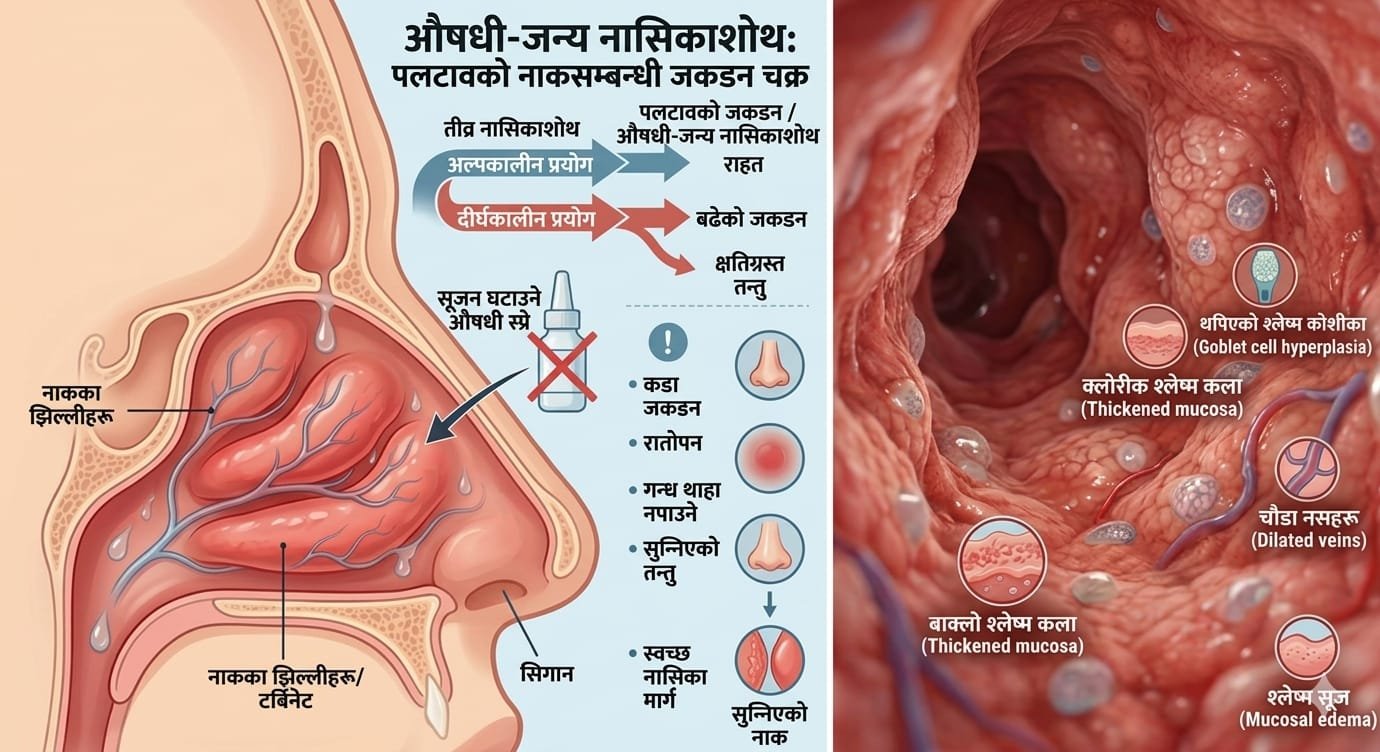
A blocked nose can be frustrating enough to disrupt sleep, concentration, and daily comfort. For many people, over-the-counter nasal decongestant sprays seem like a quick and effective solution. But what happens when the very treatment meant to relieve congestion ends up making it worse? This paradoxical condition is known as “RHINITIS MEDICAMENTOSA” often called “Rebound Congestion.”
What Is Rhinitis Medicamentosa?
Rhinitis medicamentosa (RM) is a form of non-allergic rhinitis caused by the overuse of topical nasal decongestants. These sprays, typically containing agents like oxymetazoline or xylometazoline, work by constricting blood vessels in the nasal lining. This reduces swelling and opens up the airways, providing rapid relief.
However, when used for more than a few days (usually beyond 3–5 days), the nasal tissues can become dependent on the medication. Once the effect wears off, the blood vessels dilate even more than before, leading to worsening congestion—and prompting further use. This creates a cycle that can be difficult to break.
Signs and Symptoms
The hallmark symptom of rhinitis medicamentosa is persistent nasal congestion that does not improv or worsens despite continued use of decongestant sprays. Other signs may include:
- A constant “blocked nose” feeling
- Reduced effectiveness of the spray over time
- Dryness or irritation inside the nose
- Difficulty sleeping due to congestion
Unlike allergic rhinitis, RM typically does not involve itching, sneezing, or watery eyes.
Why Does It Happen?
The exact mechanism isn’t fully understood, but repeated exposure to decongestants is thought to alter the regulation of blood flow in the nasal tissues. Over time, the nasal lining becomes less responsive to the medication, while also becoming more prone to swelling when the drug is not present.
In simple terms, the nose “forgets” how to function normally without the spray.
Who Is at Risk?
Anyone using nasal decongestant sprays for extended periods is at risk, but certain factors can increase susceptibility:
- Chronic sinus issues
- Frequent colds or upper respiratory infections
- Allergic rhinitis leading to repeated decongestant use
- Lack of awareness about recommended usage limits
Because these medications are easily available without a prescription, many users are unaware of the risks.
Treatment and Recovery
The cornerstone of treatment is stopping the offending nasal spray. This can be challenging, as symptoms may temporarily worsen. However, several strategies can help:
Gradual withdrawal: Reducing use step by step rather than stopping abruptly
Switching to saline sprays: These help moisturize and soothe nasal passages without causing dependency
Intranasal corticosteroids: Prescribed by a doctor to reduce inflammation during recovery
Oral medications: In some cases, antihistamines or steroids may be recommended
Most people begin to see improvement within one to two weeks after stopping the spray, though full recovery can take longer in severe cases.
Prevention: The Best Approach
Preventing rhinitis medicamentosa is straightforward:
- Use nasal decongestant sprays for no more than 3–5 consecutive days
- Follow dosage instructions carefully
- Consider alternative treatments like steam inhalation or saline sprays for longer-term relief
- Seek medical advice if congestion persists beyond a few days
Final Thoughts
Rhinitis medicamentosa is a classic example of how a helpful medication can backfire when misused. Awareness is key. By understanding the risks and using decongestants responsibly, you can avoid the cycle of rebound congestion and breathe easy without dependency.
If you find yourself reaching for a nasal spray more often than recommended, it may be time to consult a healthcare professional. Your nose will thank you for it.
Dr. Bonita S. Pradhan

